
Concrete driveways, patios and slabs across North Carolina
Poured to a written spec: four inches minimum on a compacted stone base, a 3,500 to 4,000 PSI air-entrained mix, reinforced, and jointed on a plan so the shrinkage cracks land where we put them.
- Mix strength and joint plan on the quote
- Walk-on and drive-on dates in writing
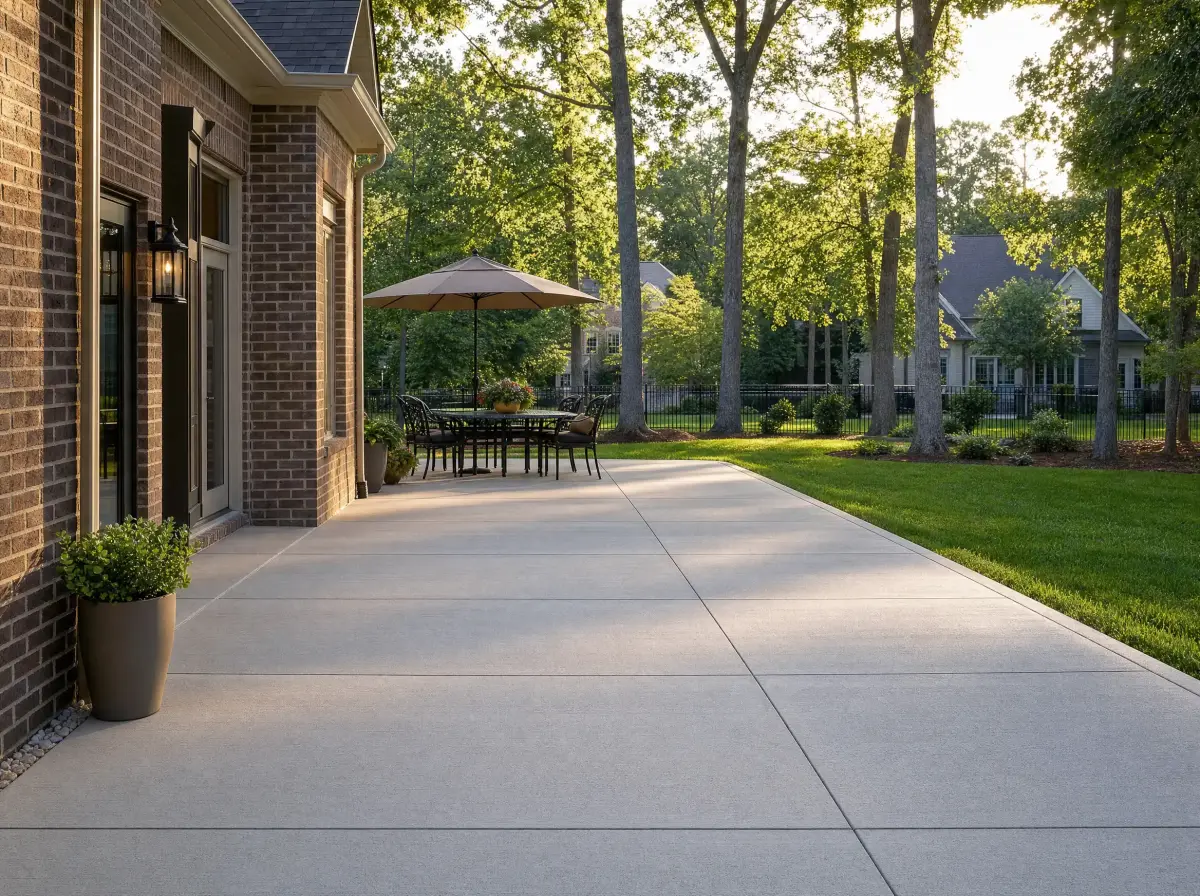
- Broom, exposed aggregate, stamped or colored
 Design concept
The short answer
A new concrete driveway in North Carolina costs about $8 to $18 per square foot installed in 2026, and a concrete patio $8 to $20 depending on finish. A broom-finish driveway sits at $8 to $12, exposed aggregate at $10 to $15, and stamped or colored concrete at $12 to $20. Those figures include excavation, four inches of compacted crushed stone, a four-inch slab of 3,500 to 4,000 PSI air-entrained concrete, fiber, mesh or rebar reinforcement, and control joints sawn every 8 to 12 feet so shrinkage cracks land where they are planned. Removing an old driveway adds $2 to $8 per square foot. A standard two-car driveway of 600 square feet therefore lands between $4,800 and $12,000. Empire Stone Group quotes every job on site, itemized down to the mix strength, at no charge, and puts the walk-on and drive-on dates in writing before the crew leaves.
| Concrete work | What is included | Typical NC range |
|---|---|---|
| Broom-finish driveway or patio | 4" slab, 4" stone base, fiber or mesh, sawn joints | $8–12 / sq ft |
| Exposed aggregate | Same slab, washed finish, sealed | $10–15 / sq ft |
| Stamped or colored concrete | Integral color, pattern stamping, release, sealer | $12–20 / sq ft |
| Heavy-duty driveway (RV, trucks) | 5–6" slab, rebar grid, thickened edges | $12–18 / sq ft |
| Garage, shed or shop slab | 4–6" slab, vapor barrier, turned-down footing where required | $7–12 / sq ft |
| Sidewalk or path | 4" slab, broom finish, jointed every 5 ft | $8–12 / sq ft |
| Removal of old concrete | Break out, haul, dispose | $2–8 / sq ft |
Ranges reflect published 2026 North Carolina pricing and our own quoting. Access, slope, soil and how far the truck can get to the pour change the number. Your written quote is the price.
Driveways, patios, slabs and stamped work
Driveways and driveway replacement
New driveways, extensions, turnarounds and full replacements of cracked, heaved or sunken concrete. We shape the apron to the street, pitch the slab a quarter inch per foot away from the garage, and thicken the edges where tires turn.
Patios and pool decks
Broom, exposed aggregate or stamped. Pool decks get a light broom or a textured stamp for grip, are pitched away from the pool, and are jointed to work with the coping.
Stamped and decorative concrete
Ashlar slate, flagstone, wood plank, cobble and seamless textures, with integral color and a contrasting release. Borders and bands are laid out before the pour, not improvised on the day.
Pouring on North Carolina ground
Most of the Piedmont sits on red clay that swells wet and shrinks dry, so a slab poured straight on it heaves at the corners within a few seasons. We separate the slab from the clay with compacted crushed stone and fabric, pitch it a quarter inch per foot, and order an air-entrained mix because the freeze-thaw nights between December and February scale a plain 3,000 PSI interior mix. Charlotte, Raleigh and most suburbs do not require a permit to replace a driveway in its footprint; a new apron at a state road needs an NCDOT driveway permit, which we pull.
Slabs, sidewalks and steps
Garage, shop, shed and HVAC pads with a vapor barrier and, where the county requires it, a turned-down footing. Sidewalks and poured steps that meet the house and the walk at the right heights.
Concrete or pavers?
| Feature | Poured concrete | Pavers |
|---|---|---|
| Cost, installed | $8–20 / sq ft | $14–30 / sq ft |
| If the ground moves | Cracks at a joint; repair is patch or replace | Lift and re-set the affected area |
| Best use | Driveways, slabs, large patios on a budget | Patios, walkways, pool surrounds, curves |
| Maintenance | Seal stamped every 2–3 years | Top up joint sand every few years |
| Add on later | Cold joint shows | Extends seamlessly |
On the heavy clay that covers most of the Piedmont, we lean toward pavers for patios and concrete for driveways and slabs. If you are torn, ask for both numbers on the same quote.
Most driveways take four working days
Layout and removal
Utilities located, forms set to the staked layout and checked for pitch. Old concrete broken out and hauled the same day.
Base and reinforcement
Four inches of crushed stone compacted in lifts. Mesh or rebar set on chairs, not pulled up through wet concrete.
Pour and finish
Concrete placed, screeded and floated. Broom, aggregate wash or stamp applied when the slab itself shows it is ready.
Joints, cure, seal
Joints sawn within 6 to 18 hours. Forms pulled, backfilled, sealed when cured. You get the walk-on and drive-on dates in writing.
What homeowners ask before a pour
How thick should a residential concrete driveway be?
Four inches is the standard for cars and light trucks, on at least four inches of compacted crushed stone. If you park an RV, a boat trailer or a heavy work truck, we pour five to six inches with rebar on a grid. Thickness is the single biggest factor in how a driveway holds up, and it is listed on every quote we write.
What PSI concrete do you use for driveways in North Carolina?
We order 3,500 to 4,000 PSI air-entrained concrete for exterior flatwork. Air entrainment is what lets the slab survive North Carolina's freeze and thaw cycles without surface scaling. A 3,000 PSI interior mix costs a little less and is the wrong product outdoors.
Will my new concrete crack?
Concrete shrinks as it cures, so it will crack somewhere; the joints decide where. Control joints are cut every 8 to 12 feet on a four-inch slab, at inside corners and where the slab changes width, so the cracks happen inside the joints instead of across the surface. Random cracking usually points to missing joints, a poor base or a mix with too much water.
How much more does stamped concrete cost than a broom finish?
In North Carolina a broom-finish patio or driveway typically runs $8 to $12 per square foot and stamped concrete $12 to $20 per square foot in 2026. The difference is the pattern stamping, integral color and release, and the sealer. Multiple patterns, borders and hand-applied stain accents push it higher.
When can I drive on a new concrete driveway?
Walk on it after 24 to 48 hours, park a passenger car after 7 days, and keep heavy trucks and deliveries off it for 28 days when it reaches full design strength. We put the dates in writing before we leave the site.
Do you remove the old driveway?
Yes. Breaking out and hauling an old concrete or asphalt driveway adds roughly $2 to $8 per square foot depending on thickness, reinforcement and access. It is a separate line on the quote so you can see it.
How often does stamped concrete need to be sealed?
Every two to three years for a driveway or a patio in full sun, longer for shaded areas. Sealer is what keeps the color from fading and stops water and de-icer from getting into the surface. We seal at install and can put you on a reminder schedule.
The finish sets the price, so pick it before you sign
The slab underneath is the same on all three: four inches of concrete on four inches of compacted stone, reinforced and jointed. What changes the number per square foot is what happens to the surface in the four hours after the pour.
 Design concept
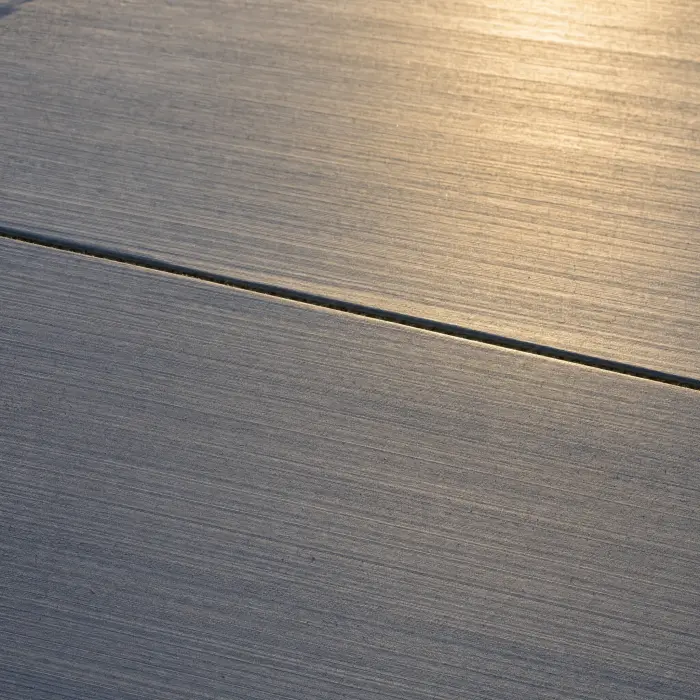
Broom
$8–12 / sq ftBrushed while the slab is still green. The most slip-resistant of the three and the cheapest to repair, which is why it is still the default for driveways.
 Design concept
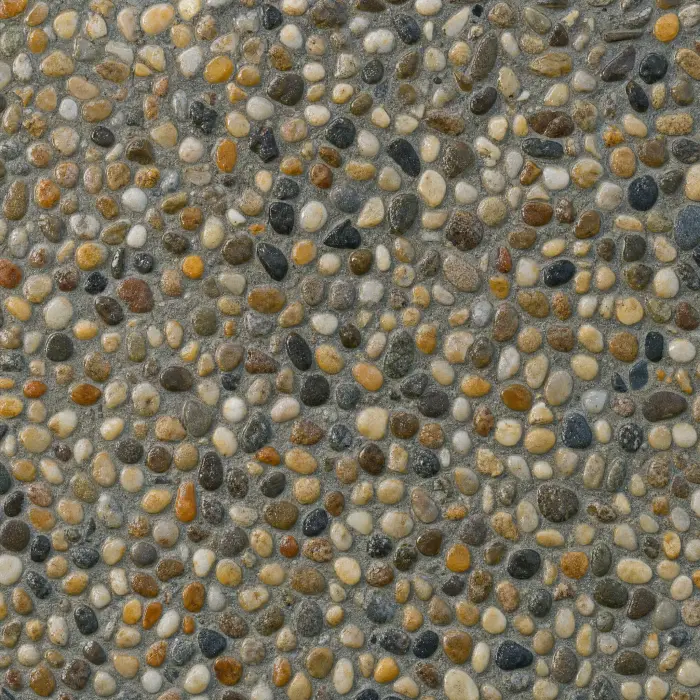
Exposed aggregate
$10–15 / sq ftThe top paste is washed off to show the stone in the mix. Hides dirt and tire marks better than anything else here, and needs sealing every few years to keep the color.
 Design concept
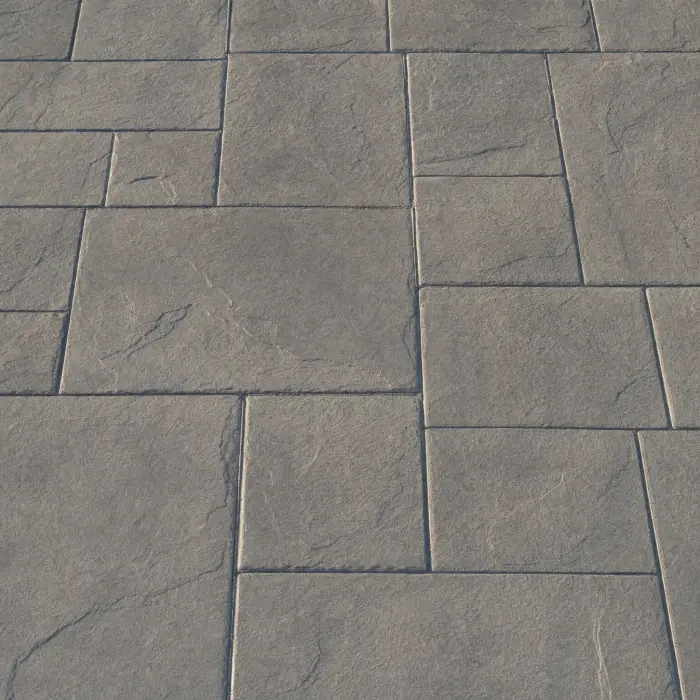
Stamped or colored
$12–20 / sq ftPattern pressed into the wet slab over integral color. It reads as stone from a distance for less than stone costs, and of the three finishes it shows the crew's timing most.
Ranges are 2026 North Carolina installed prices for a straightforward pour and are confirmed on site. Demolition of an existing slab adds $2–8 per square foot.
Get a written quote for your concrete
The estimate is free and on site, and the quote is itemized down to the PSI. Most quotes go out within two business days.