
 Design concept
Patios
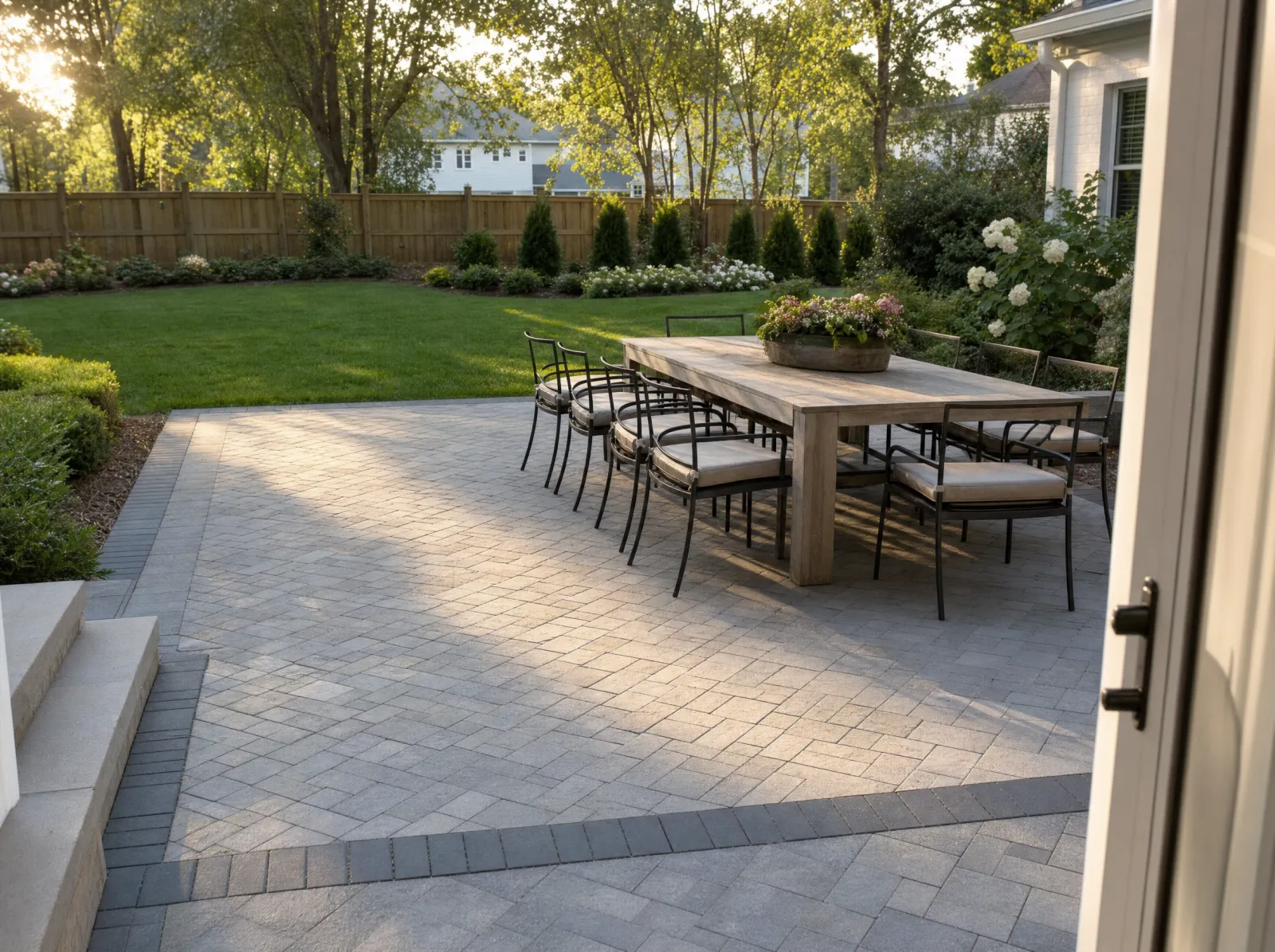
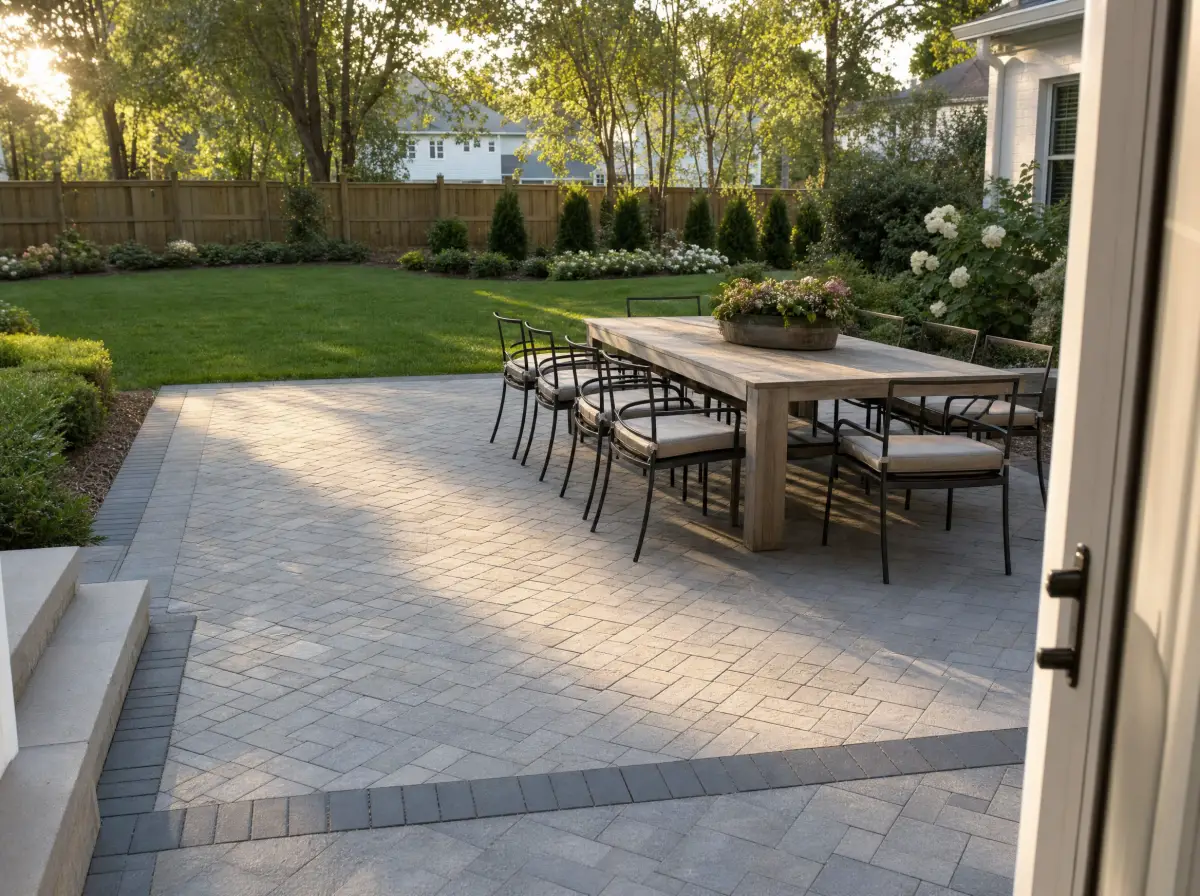
Rectangles, curves and multi-level patios with steps, seat walls and a fire pit if you want one. We lay out the shape with paint and string before the first shovel so you see the size in your yard, not on paper.
Concrete and natural-stone pavers on a six to eight inch compacted base, with edge restraint and locked joints. Patios, walkways, pool surrounds and paver driveways that flex with North Carolina clay instead of cracking over it.
 Design concept
A paver patio in North Carolina costs about $14 to $30 per square foot installed in 2026 with concrete pavers, $20 to $30 with premium large-format pavers, and $25 to $50 with natural stone such as travertine or bluestone. The price includes excavation to seven to nine inches, geotextile fabric over the clay, six inches of crushed stone compacted in two- to three-inch lifts, one inch of screeded bedding sand, the pavers themselves with wet-saw cuts and a border, edge restraint spiked every ten inches, and polymeric sand swept and set in the joints. A 16 by 20 foot dining patio of 320 square feet usually lands between $4,500 and $9,600 in concrete pavers and takes three to five working days. On Piedmont clay that swells wet and shrinks dry, pavers flex instead of cracking and can be lifted and re-set, which is why Empire Stone Group recommends them for patios, walkways and pool decks.
| Paver work | What is included | Typical NC range |
|---|---|---|
| Concrete paver patio | 6" base, 1" bedding, 60 mm pavers, edge restraint, polymeric sand | $14–24 / sq ft |
| Premium or large-format pavers | Same build, slab-style or textured pavers, border course | $20–30 / sq ft |
| Natural stone (travertine, bluestone, flagstone) | Same base, mortared or dry-laid to suit the stone | $25–50 / sq ft |
| Walkway or front path | Narrow runs cost more per foot: more cutting, more edge | $18–30 / sq ft |
| Pool surround | Coping, pitched away from the pool, slip-rated surface | $20–35 / sq ft |
| Paver driveway | 8–12" base, 80 mm pavers, herringbone, concrete edge | $20–32 / sq ft |
| Seat wall or step, added | Matching wall block, capped | $60–120 / linear ft |
Ranges reflect published 2026 North Carolina pricing and our own quoting. Pattern, cuts, access and drainage change the number. Your written quote is the price.
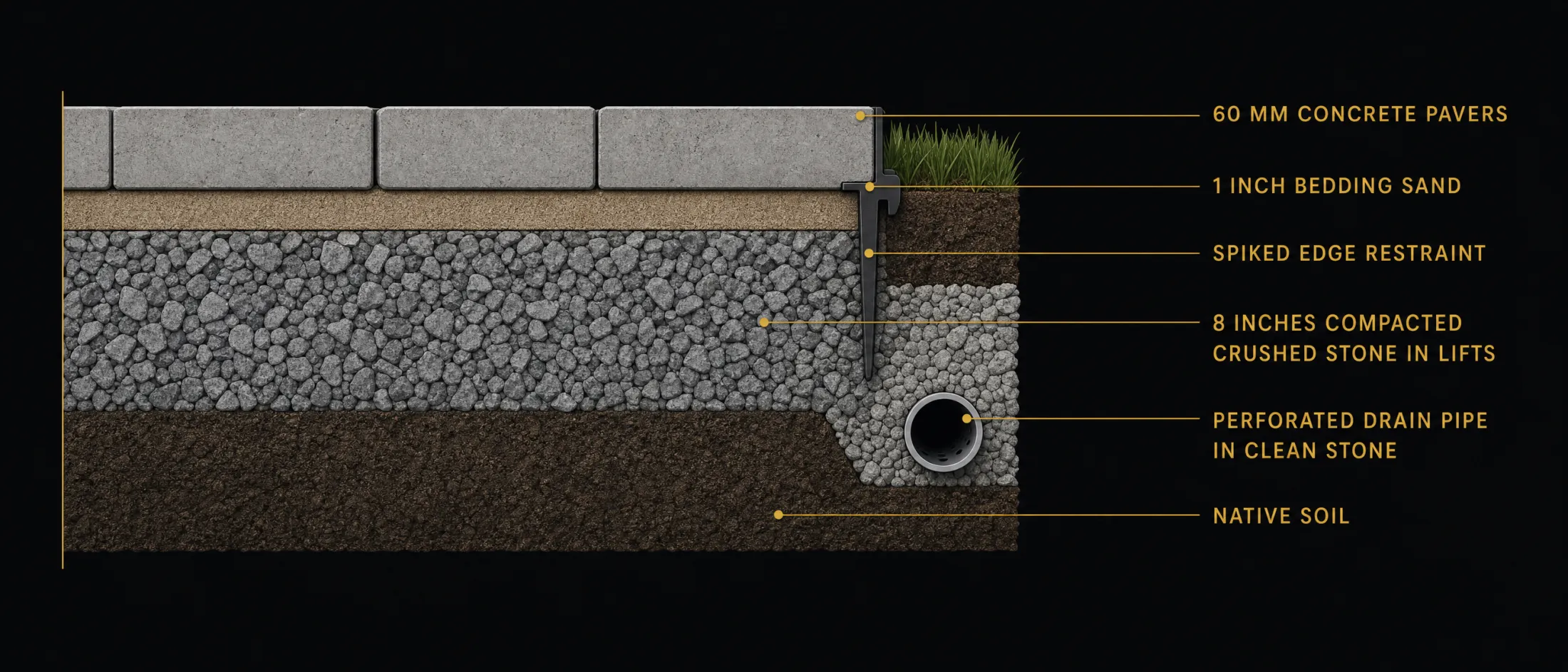
Seven layers. Scroll and the cross-section is built up under the pavers. Every one of them is on your quote by name.
Illustration, not a photograph. Depths shown are for a patio; driveways take 8 to 12 inches of stone.
To 7 to 9 inches below finished grade for a patio, 10 to 14 for a driveway. Shape painted on the grass, string lines set for height and pitch.
Over the clay subgrade so the stone base does not migrate into the soil.
ABC or #57 topped with screenings, placed and plate-compacted in lifts of 2 to 3 inches, one lift at a time.
One inch, screeded flat. We never use it to fill a low spot in the base.
Laid from a fixed edge, cut with a wet saw, compacted into the bedding with a padded plate.
On every open edge, spiked into the base every ten inches.
Swept, compacted, misted and cured. Use the patio the same evening.
Every step above is on the quote by name, so you can compare it against a lower bid that leaves one out.
Same compacted base under all of it. The shape, the paver and the edge change.
Design conceptRectangles, curves and multi-level patios with steps, seat walls and a fire pit if you want one. We lay out the shape with paint and string before the first shovel so you see the size in your yard, not on paper.
 Design concept
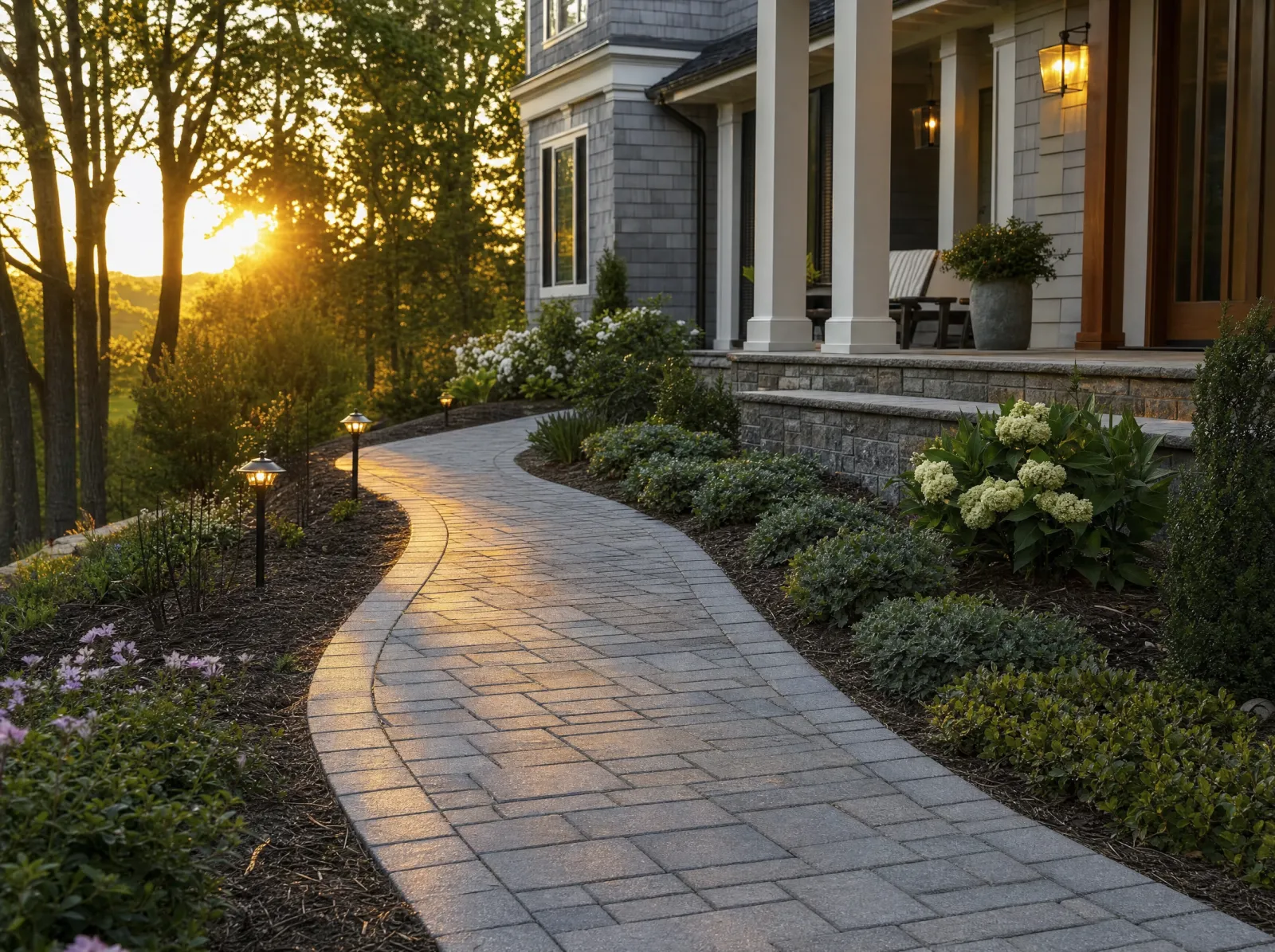
Our walkways get a soldier-course border, a hidden edge restraint spiked every ten inches, and a pitch that sends rain off to the side instead of down the walk.
 Design concept
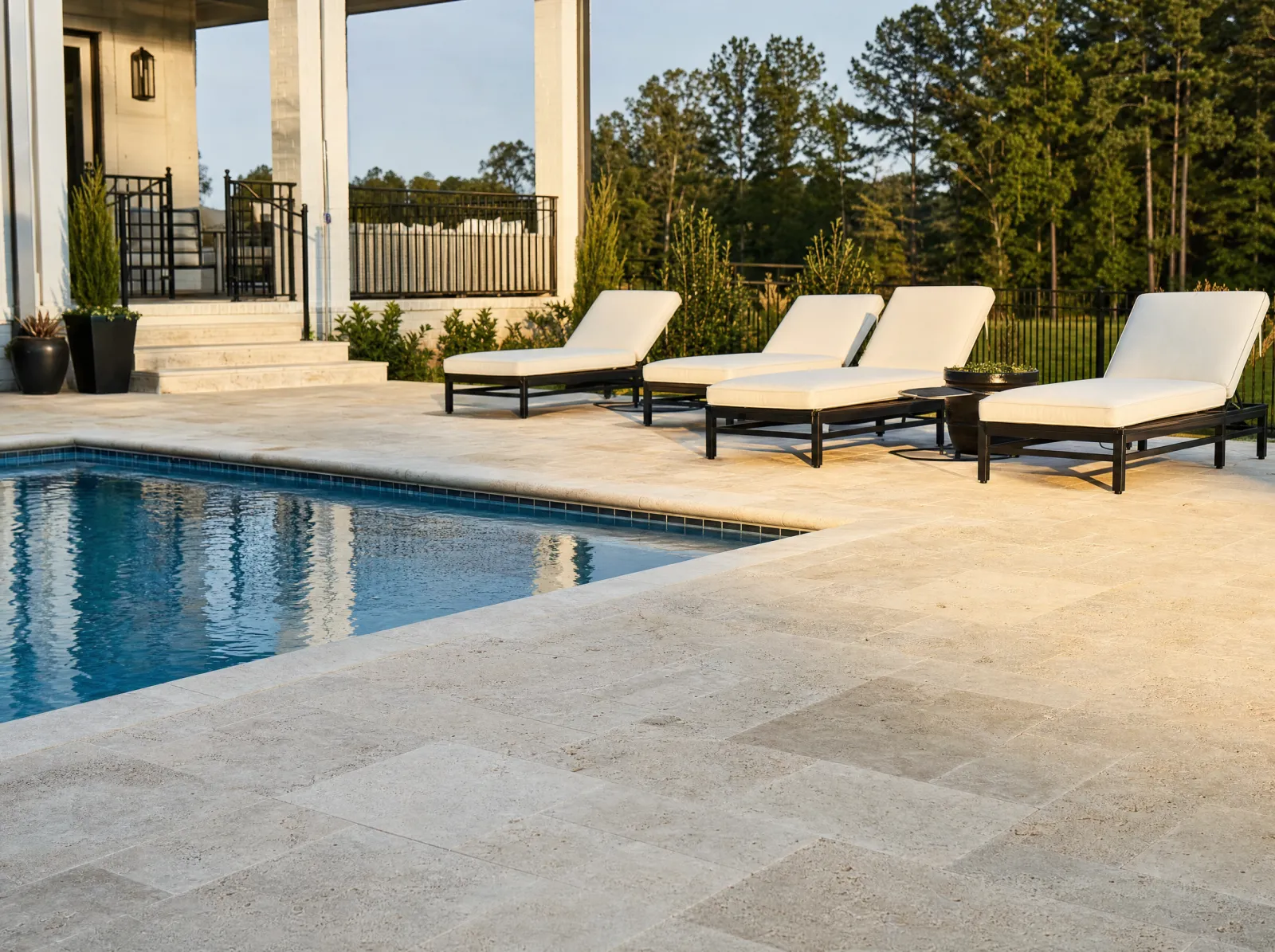
Coping first, then the field, pitched away from the water. Textured or tumbled pavers for grip, and channel drains where the deck meets a wall or the house.
 Design concept
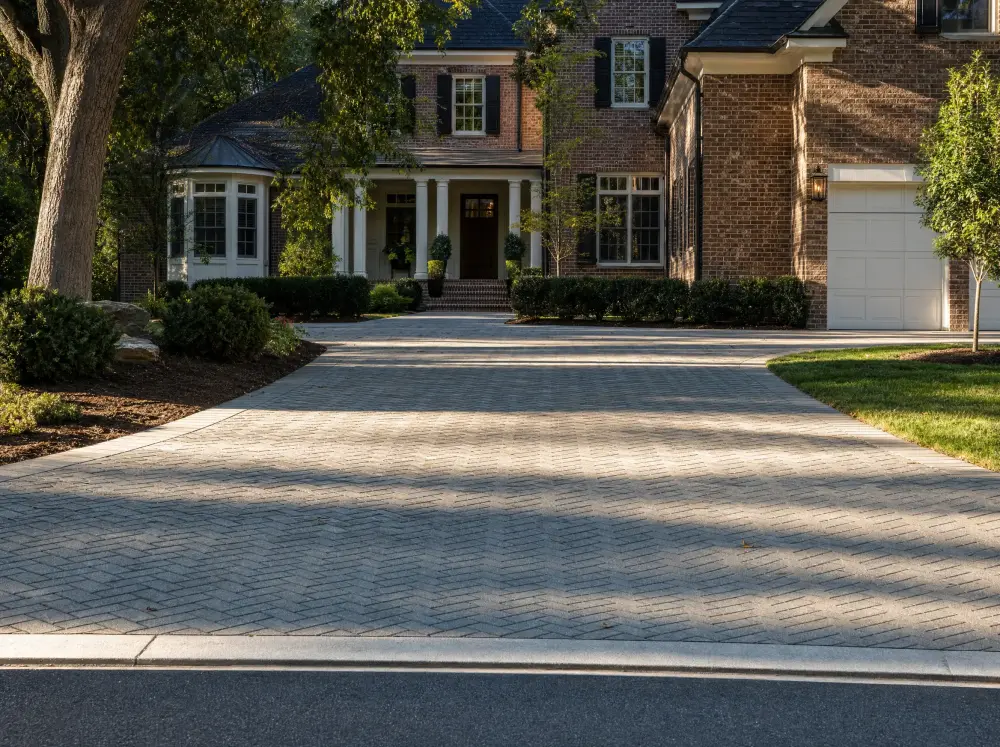
Eighty-millimeter pavers in herringbone on a deep base with a concrete-haunched edge. More than a concrete driveway, and repairable one section at a time for the life of the house.
 Design concept
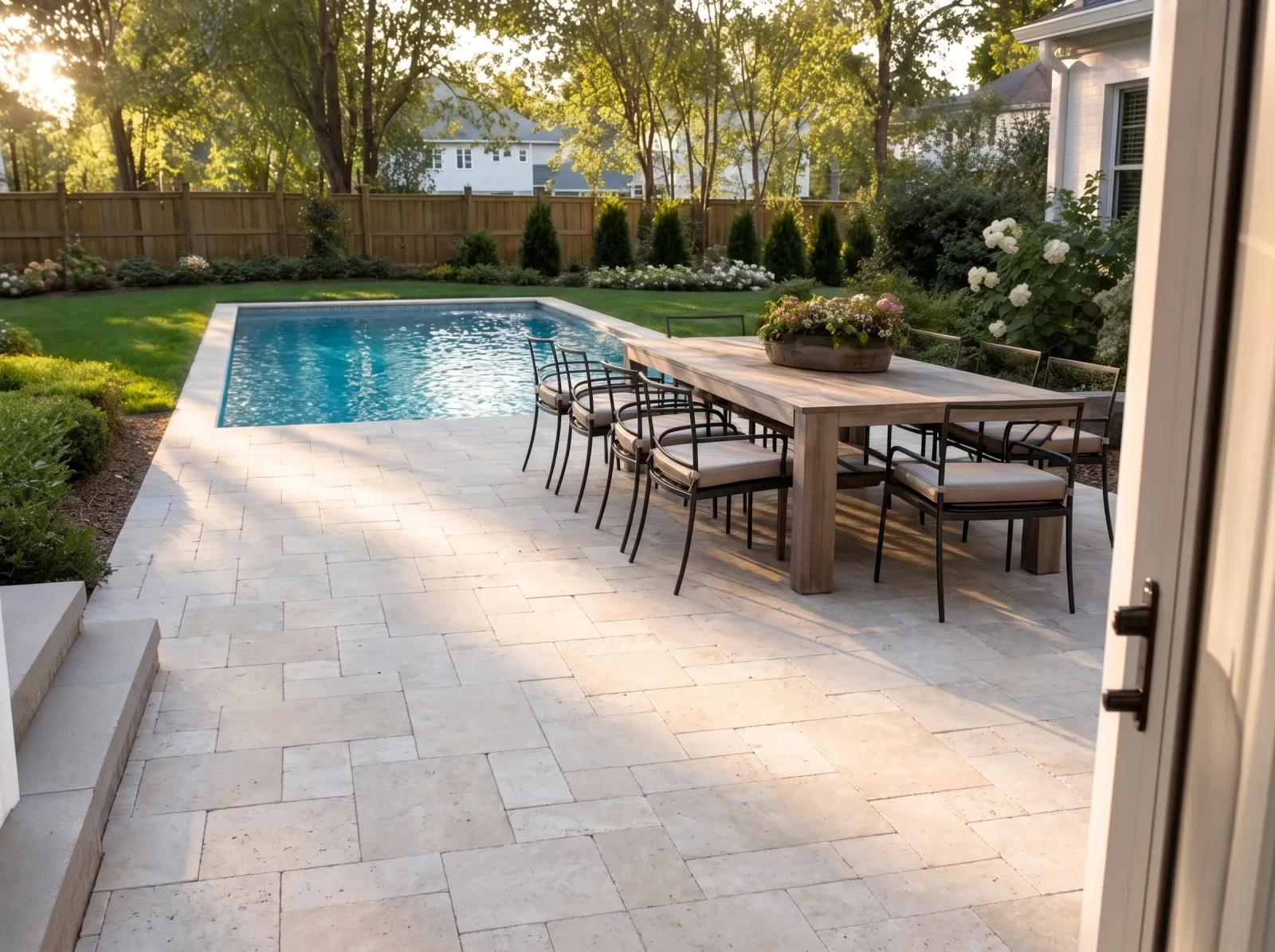
Irregular flagstone, travertine or bluestone go on the same compacted stone base as pavers, either dry-laid with tight joints swept with stone dust, or mortar-set over an existing sound slab. Natural stone runs thicker and heavier than a concrete paver, so cuts are slower and the price per square foot is higher. Choose it for the look; choose concrete pavers when repairability, a uniform surface or budget matter more.
Ask for two on the same quote and compare the numbers for your square footage.
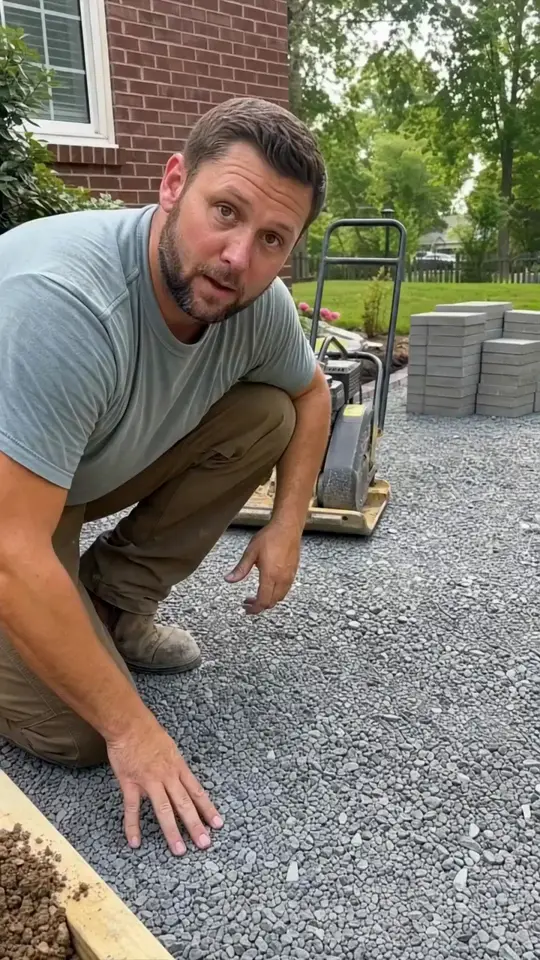
Once the pavers are down you cannot see the base, and it is what decides whether the patio is still flat in ten years. This is what it should look like the day before laying starts.
 Illustration
Piedmont clay swells when wet and shrinks when dry, which moves whatever sits on it. A poured slab cracks; a paver surface flexes with the movement, and if an area does settle the pavers are lifted, the base is corrected and the same pavers go back. That repairability is the main reason we recommend pavers for patios here.
Empire Stone Group is based in Mooresville and installs paver patios, walkways, pool surrounds and paver driveways across the Charlotte metro and Lake Norman, and further across North Carolina when the job warrants the drive. Tell us the address when you request a quote and we confirm scheduling for your area on the first call.
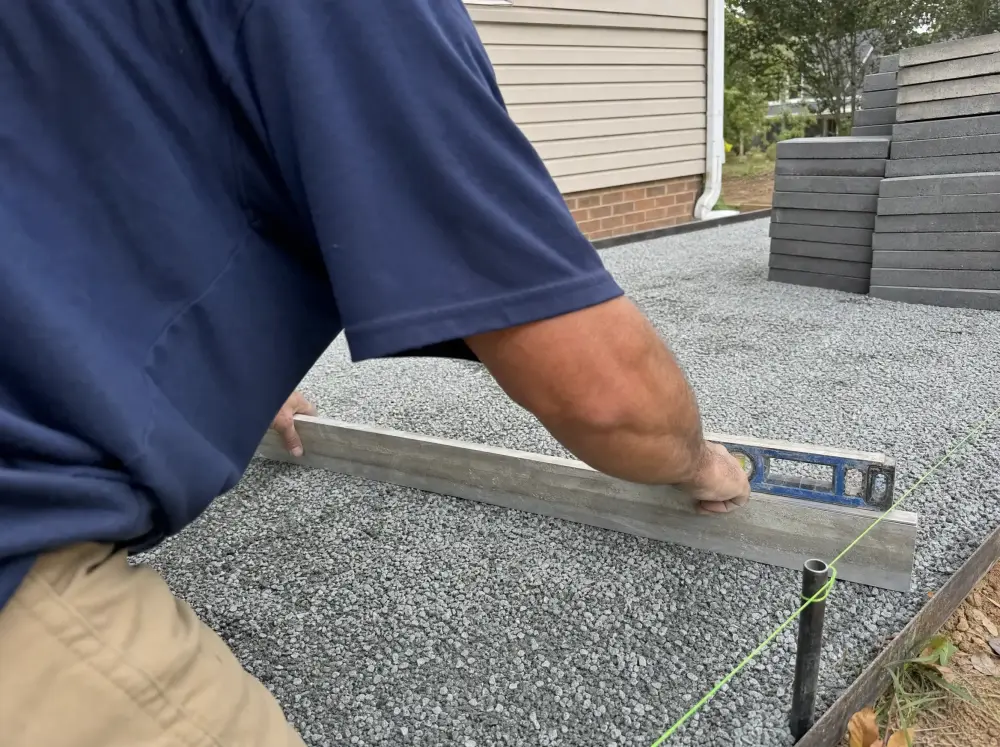
Shape painted on the grass, string lines set for height and pitch, utilities located. You approve the footprint before we dig.
Dig to depth, lay the fabric, and compact the stone in lifts with a plate compactor. It is the slowest day of the job, and the most important.
Bedding sand screeded, field laid from the fixed edge, border and cuts done with a wet saw, everything compacted into the bed.
Edge restraint spiked, polymeric sand swept and set, site cleaned. Use the patio the same evening.
A paver patio in North Carolina typically costs $14 to $30 per square foot installed in 2026 with concrete pavers, and $25 to $50 with natural stone such as travertine or bluestone. A 16 by 20 foot patio of 320 square feet usually lands between $5,000 and $9,500 in concrete pavers. Steps, seat walls, curves and borders add to it.
Yes. Empire Stone Group is based in Mooresville and installs paver patios, walkways, pool surrounds and paver driveways across the Charlotte metro and Lake Norman, and further across North Carolina when the job warrants the drive. Tell us the address when you request a quote and we confirm scheduling for your area on the first call.
Both sit on the same compacted stone base. Concrete pavers give a uniform, slip-rated surface, are the easier repair, and cost less per square foot. Flagstone and other natural stone give an irregular, one-of-a-kind look at a higher material and labor cost, with tighter joints that need more careful cutting. Ask for both on one quote and compare the two numbers for your square footage.
Six inches of compacted crushed stone under a patio or walkway, eight to twelve inches under a driveway, compacted in lifts of no more than three inches. On top of that goes one inch of screeded bedding sand, then the pavers. Skipping base depth is the most common reason a patio settles or ripples within a few years.
Piedmont clay swells when wet and shrinks when dry, which moves whatever sits on it. A poured slab cracks; a paver surface flexes with the movement, and if an area does settle the pavers are lifted, the base is corrected and the same pavers go back. That repairability is the main reason we recommend pavers for patios here.
Polymeric sand is joint sand mixed with a binder. Swept into the joints and misted with water, it hardens enough to keep out weeds and ants and to stop the sand washing out in a storm, while still letting water drain. We use it on every paver job. It needs topping up every three to five years.
Yes. A gentle slope is handled with grading and a pitch of about a quarter inch per foot for drainage. A steeper yard needs a retaining wall or a raised patio with a wall face, which we build as part of the same job so the base, the wall and the pavers are one design.
A typical patio of 300 to 500 square feet takes three to five working days: one for excavation and base, one or two for laying, and one for cutting, edge restraint and joint sand. You can use it the day the joint sand sets.
Yes. A paver driveway uses a thicker paver, usually 80 mm, on a deeper base of eight to twelve inches, and a pattern such as herringbone that locks under tire loads. It costs more than concrete up front and can be repaired section by section instead of replaced.
The estimate is free and on site, and the quote is itemized down to the base depth. Most quotes go out within two business days.