
Fire pits, outdoor kitchens and the patio they sit on
We build the fire pit, the grill counter and the seating as one floor, on one quote. The stone matches the house, the lighting is run before the pavers go down, and the layout is planned for use after dark.
- One crew and one written price for the whole floor
- Low-voltage lighting planned before paving
- Gas, power and drainage roughed in first
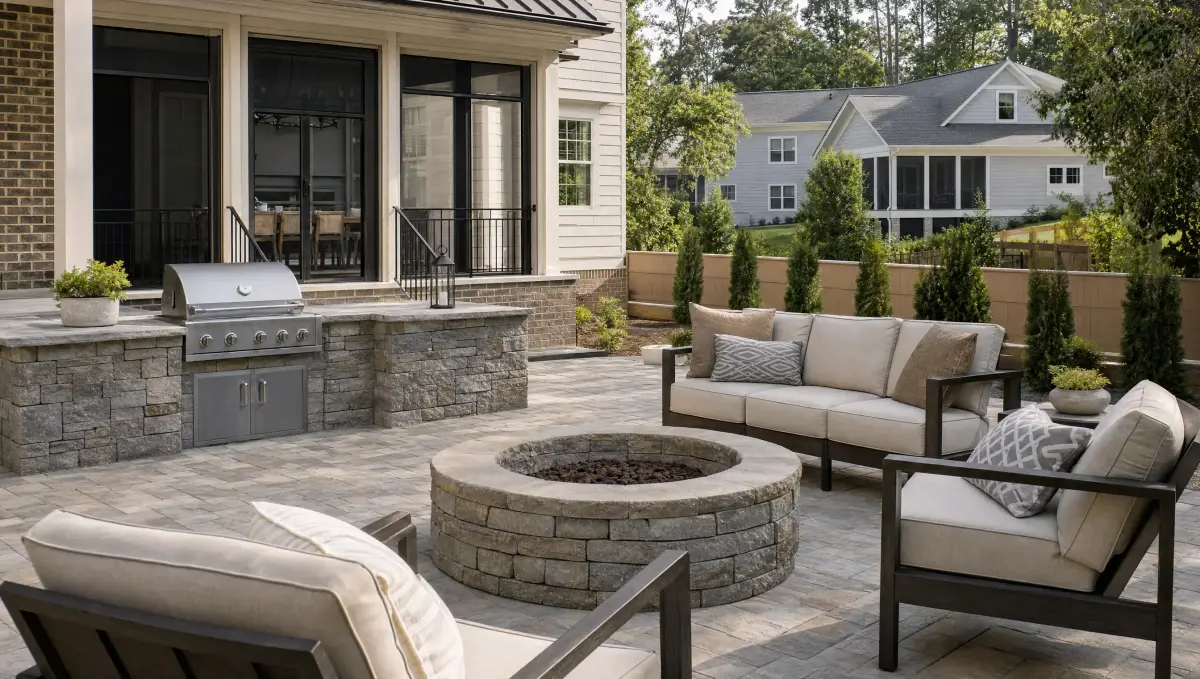 Design concept
The short answer
In North Carolina in 2026, a built-in masonry fire pit costs about $2,500 to $6,000, a gas fire pit $4,000 to $9,000 plus the gas line, an outdoor fireplace $6,000 to $20,000, a grill island $8,000 to $15,000, and a full outdoor kitchen with 12 to 20 feet of counter $20,000 to $45,000. Stone veneer runs $18 to $30 per square foot installed for manufactured stone and $25 to $45 for natural stone, over lath, a scratch coat and a weep detail so the wall can dry. Each price covers the footing or slab, the block core, the firebrick liner or rated burner, the veneer, the cap or counter, and the first fire lit with you there. Gas, electrical and plumbing are done by licensed trades and appear as their own lines on the quote. Appliances are usually a third to half of an outdoor kitchen's total, so the grill you choose moves the number more than the stone does.
| Feature | What is included | Typical NC range |
|---|---|---|
| Wood-burning fire pit | Block core, firebrick liner, veneer or wall block, cap | $2,500–6,000 |
| Gas fire pit | Same, plus burner kit, valve, vented enclosure; gas line separate | $4,000–9,000 |
| Outdoor fireplace | Footing, block chase, firebox, flue, veneer, hearth | $6,000–20,000 |
| Grill island | 6–8 ft block core, veneer, counter, grill cut-out, door | $8,000–15,000 |
| Full outdoor kitchen | 12–20 ft of counter, grill, burner, fridge, sink, storage | $20,000–45,000 |
| Manufactured stone veneer | Lath, scratch coat, stone, grout or dry-stack, weep detail | $18–30 / sq ft |
| Natural stone veneer | Same build, thin-cut real stone | $25–45 / sq ft |
| Stone columns or pillars | Block core, veneer, cap, per column | $1,200–3,000 |
Ranges reflect published 2026 North Carolina pricing and our own quoting. Appliances, counter material and gas runs move the total most. Your written quote is the price.
Fire pits, fireplaces, kitchens and veneer
Fire pits
Round or square, 36 to 48 inches inside, at seat height. Wood pits get a firebrick liner and a drain; gas pits get a rated burner, a vented enclosure and a valve you can reach. Built into a new patio or set on an existing one.
Outdoor fireplaces
A footing, a block chase, a firebox, a flue sized for the opening, and veneer that matches the house or the patio. Wood or gas, with wood storage boxes at the sides and a mantel if you want one.
Grill islands and outdoor kitchens
A block core on a slab, cut for the grill, burner, fridge and doors you pick, faced in stone, topped in granite, concrete or porcelain. Gas, electrical and plumbing by licensed trades, scheduled by us.
Fire features and the local rules
North Carolina cities set their own open-burning rules: Charlotte, Raleigh and most municipalities allow a recreational wood fire in a contained pit with ten feet of clearance, some HOAs in newer subdivisions around Lake Norman and Cary allow gas only, and Mecklenburg County restricts burning on air-quality action days. Gas lines are run by a licensed plumber or gas fitter and inspected by the county, and an outdoor kitchen's refrigerator or lights need a licensed electrician on a GFCI circuit. We confirm all three for your address before the footprint is drawn.
Stone veneer
Natural or manufactured stone on foundations, porch columns, chimney chases, seat walls, kitchen islands and house exteriors. Weather barrier, lath, scratch coat, stone, and a weep detail at the bottom so the wall dries.
Gas or wood, and where it can go
| Feature | Wood | Gas |
|---|---|---|
| The fire | Real flame, smoke, crackle | Even flame, no smoke, no sparks |
| Build cost | Lower | Higher, plus gas line |
| Distance from house | 10 ft minimum, often more | Closer, under cover if rated |
| HOA and city rules | Often restricted | Usually allowed |
| Use | Build a fire, tend it | Switch on, switch off |
| Later change | Add gas with a stub we cap now | Stays gas |
We confirm your city's open-burning rule and your HOA's before the location is set, so the pit is built where it can be used.
One week for a kitchen, two days for a pit
Design and appliances
We draw the footprint on your patio, confirm clearances and rules, and lock the appliance list, because the cut-outs are built around it.
Footing and core
Slab or footing poured, block core laid and cored for gas and electrical. Trades rough in and inspect.
Veneer and counter
Scratch coat, stone set and grouted or dry-stacked, cap and counter templated and installed.
Appliances and first fire
Grill, burner, fridge and doors set, gas tested, and the first fire lit with you there.
What homeowners ask about fire features and kitchens
How much does a stone fire pit cost in North Carolina?
A built-in masonry fire pit in North Carolina typically costs $2,500 to $6,000 in 2026: a block core, a firebrick or steel liner, stone veneer or matching wall block, and a cap. Running a gas line and adding a burner kit adds $1,500 to $3,500. A fire pit built with a new paver patio costs less than one added later, because the base and the cuts are done in the same visit.
How much does an outdoor kitchen cost?
A grill island with a built-in grill, a counter and a door runs about $8,000 to $15,000 in North Carolina in 2026. A full outdoor kitchen with a grill, side burner, refrigerator, sink, storage and 12 to 20 feet of counter runs $20,000 to $45,000. Appliances are usually a third to half of the total, so the brand you choose moves the number more than the stone does.
Gas or wood fire pit?
Wood gives the fire people picture, costs less to build, and needs a firebrick liner and a place for the smoke to go. Gas lights with a switch, produces no sparks or smoke, and is what most HOAs and screened porches require; it needs a licensed gas line and proper venting of the burner enclosure. Many clients build wood and add a gas insert later, which we plan for with a capped stub.
How far does a fire pit need to be from the house?
Ten feet from the house, a fence, a deck or overhanging branches is the common minimum for a wood-burning pit in North Carolina, and some cities and HOAs require more or ban open burning entirely. Gas pits can sit closer and under a cover if the burner is rated for it. We confirm the local rule before we set the location.
What is the difference between natural and manufactured stone veneer?
Natural stone veneer is real stone cut about an inch thick; it costs $25 to $45 per square foot installed, weighs more and never fades. Manufactured stone is cast concrete colored to look like stone; it costs $18 to $30 installed, is lighter and more uniform, and the quality is now good enough that most people cannot tell the two apart from six feet. Both go over a scratch coat on metal lath, with a weep screed at the bottom.
Can you put stone veneer on my foundation or porch columns?
Yes. Exposed block foundations, brick that has been painted, porch columns, chimney chases and the base of a house are the most common veneer jobs we do. The wall gets a weather barrier, lath, a scratch coat, then the stone, with a drip and weep detail at the bottom so water gets out.
Does an outdoor kitchen need a permit?
The masonry usually does not, but the gas line, the electrical for a refrigerator or lights, and any plumbing for a sink do, and each is done by a licensed trade and inspected. We coordinate those trades and their inspections as part of the job so you have one schedule and one contact.
Most of the use is after dark, so we plan for it first
A patio gets far more use in the two hours after dinner than at two in the afternoon. That makes lighting and heat the first decisions, and both have to be made before the pavers go down, because the conduit and the gas line run under them.
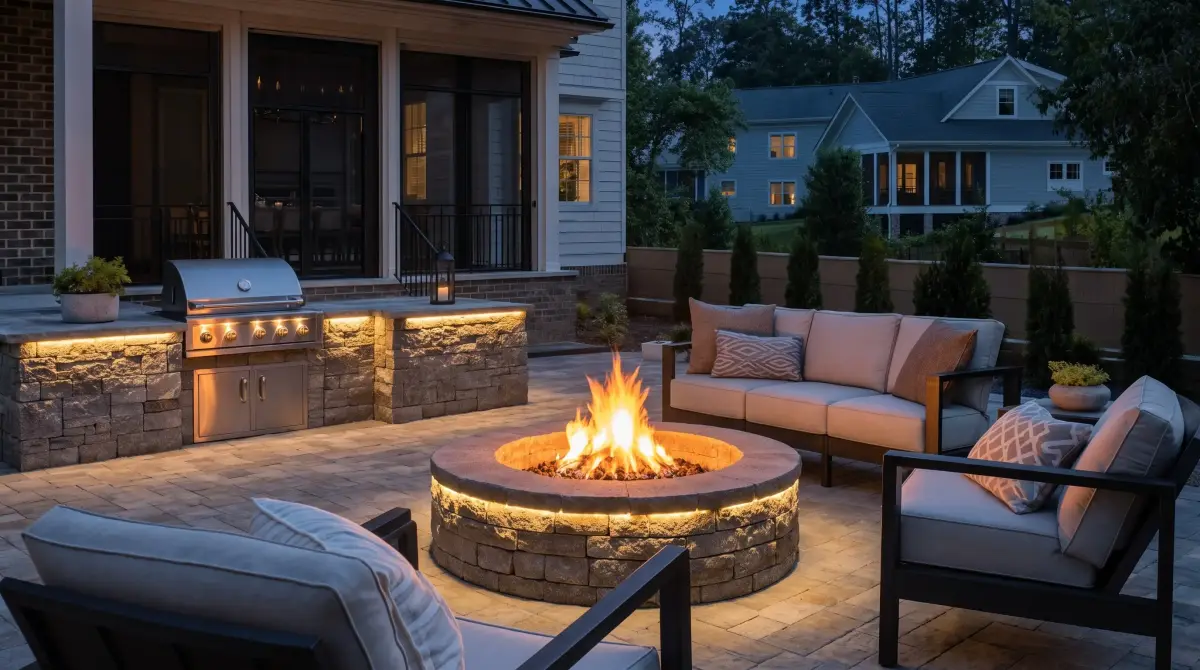 Design concept
Design concept, scrolled from day to evening. Not a photograph of an Empire Stone Group project; the same frame is shown under two lighting conditions.
- Conduit before pavers. Low-voltage runs to the wall caps, the steps and the grill counter go in with the base, not chased in afterwards.
- Heat you can sit next to. Seat-height fire pit walls at 18 to 20 inches, set far enough from the seating that the circle still works with chairs pulled out.
- Gas and power roughed in together. They share a trench and an inspection, which saves three separate visits after the patio is finished.
Get a written quote for your fire pit or kitchen
The estimate is free and on site, and the quote is itemized down to the burner. We check the burning rules for your address before we draw anything.